


Ruby-AI Mate Now
4.6278.00 Reviews
App Specs
- Version
- 1.0.7
- Updated On
- License
- Free
- Downloads
- 100,000+
- Developer
- Jay C
- Categories
- Entertainment
- Platform
- Android
Screenshots


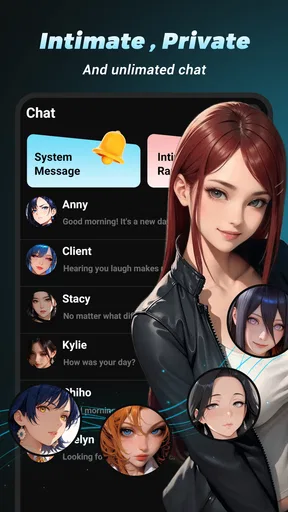

 Analysis by AppCompare
I approached Ruby-AI Mate as an entertainment app rather than a conventional messaging tool. Its central idea is simple: you spend time with an AI companion and use that interaction to build stories together. That makes it a very different proposition from a streaming app, a social network, or a standard chatbot used mainly for quick answers.
My first impression was that the best way to judge it is not by asking whether it replaces a real friend. It does not. The more useful question is whether it gives you an enjoyable, low-pressure space for conversation, imagination, and ongoing fictional scenarios. For people who like character-driven chats or collaborative storytelling, that distinction matters. For anyone looking for factual research, real human discussion, or a full writing suite, another category of app will probably make more sense.
What I considered before recommending it
I looked at the app through four practical questions: how easy it is to return to, how much control the user has over the conversation, whether the story element feels worthwhile beyond the first few sessions, and whether the free starting point is enough to understand the experience. Those questions are more revealing here than a simple feature checklist because an AI companion lives or dies by the quality of repeated interactions.
The app is published by Jay C and sits in the entertainment category. It is free to install, while optional purchases range from around eleven dollars to around forty-four dollars per item. That pricing makes it especially important to decide whether you enjoy the basic conversational loop before spending anything. I would not treat the presence of purchases as a reason to avoid it, but I would approach them carefully and avoid buying out of curiosity alone.
Ruby-AI Mate is marked for mature audiences aged seventeen and over. That is not a minor detail for families sharing a device, younger users, or anyone expecting a child-friendly storytelling app. I would check the age suitability before installing it for someone else, and I would keep the mature classification in mind when deciding what sort of conversations feel appropriate.
The app requires Android seven or later, so it should be accessible on many older Android phones. Its current release is version 1.0.7, which suggests that the experience may still be developing rather than representing a long-established, fully settled product. I see that as a reason to keep expectations realistic: the concept is clear, but the smoothness and depth of an AI companion can vary as the app evolves.
Why the companion format feels different
A normal chatbot often encourages a question-and-answer rhythm. You ask for an explanation, a summary, an idea, or a piece of text, then leave. Ruby-AI Mate is better understood as a continuing entertainment space. Instead of treating every message as a separate task, I found it more useful to give the conversation a direction and let the exchange develop over time.
Worth Reading Before You Choose

EA SPORTS FC Mobile 26 Is a Bigger Football Game, but It Takes Time

Flipboard Shows What News Apps Must Do Beyond the Feed

Switching to Android Auto Means Rethinking Your Driving Routine

Google Calendar Makes a Crowded Week Easier to Manage

Ludo King Makes the Most of the Minutes Between Plans

Baby Panda World Brings Quick Play to Modern Phones, but Its Game Library Feels Busy
That change in mindset improves the experience. A short prompt such as “help me start a mystery in a coastal town” gives the interaction somewhere to go, while a sequence of unrelated questions can make any companion app feel shallow. I recommend deciding what role you want the app to play before opening it: a creative partner, a casual conversational presence, or a way to improvise fictional scenes. The clearer that intention is, the easier it is to judge whether the app is working for you.
The story angle is also more practical than it may first appear. You do not need to be writing a novel to benefit from it. I used this kind of setup as a way to test plot ideas, explore a character’s reaction, or turn a spare few minutes into a small creative exercise. It can be a gentle alternative to staring at a blank page because the conversation gives you something to respond to.
Everyday use: a short session that has a purpose
Imagine finishing work or school with twenty minutes to spare before dinner. You do not want to commit to a film, but you also do not want another silent scroll through social feeds. In that situation, I would open Ruby-AI Mate with one specific prompt: establish a setting, introduce a problem, and ask the AI friend to react in character. The session has a beginning and an immediate creative objective, so it is less likely to feel like aimless tapping.
A useful habit is to end the session at a natural story beat rather than continuing until the conversation becomes repetitive. I might stop after a discovery, a decision, or a new question, then return later with a brief reminder of where the scene ended. This creates a stronger sense of continuity than sending random prompts every time. It also makes the app easier to fit around a normal day because each visit can have a manageable purpose.
For users who enjoy journaling, another workable routine is to use the companion as a prompt generator rather than asking it to do all the creative work. Ask for a dilemma, choose the option that interests you, and write your own response before sending anything back. That keeps the experience interactive and prevents the app from becoming a passive stream of generated text.
Where it is strongest
The clearest strength is the combination of companionship and imagination. Many entertainment apps provide content for you to consume, while many productivity tools ask you to produce something efficiently. This app occupies the space between those habits. It gives you something to react to, but it also leaves room for your choices to shape the conversation.
I particularly like it for users who find traditional creative-writing software intimidating. A blank document can make a simple idea feel like a major project. A conversational exchange lowers that barrier because you can begin with an ordinary sentence and build from there. The result may not be polished fiction, but it can be a useful way to discover a premise, a mood, or a character voice.
It also suits people who prefer private, low-pressure experimentation. Sharing an unfinished story with friends can feel exposing, and public social platforms bring their own distractions. A one-to-one creative conversation can make it easier to try unusual ideas without worrying about an audience. I would not confuse that with human connection, but as a personal entertainment routine it has genuine appeal.
The app’s strongest use case is therefore narrow but meaningful: you want an AI companion that can participate in imaginative exchanges, and you value the process of developing a scene as much as the final text. If that sounds like you, the concept is more distinctive than a generic assistant that simply answers requests.
Three ways to get more from each conversation
First, give the interaction a small constraint. Ask for a scene that takes place during one evening, limit the number of characters, or decide that every reply must introduce a new clue. Constraints reduce vague responses and give you a clear way to steer the story. They also help reveal whether the app can maintain a direction instead of drifting between unrelated ideas.
Second, separate planning from performance. Before starting a longer exchange, write a private note with the setting, the character you want to play, the immediate conflict, and the tone you prefer. Then send only the information needed for the next scene. This keeps the conversation readable and makes it easier to correct the direction when the AI takes an unexpected turn.
Third, use deliberate resets. If a story becomes repetitive, do not keep repairing every detail in the same thread. Start a fresh premise with a clear opening situation, or return to the last point that still felt interesting. The trade-off is that a reset may reduce continuity, but it can be more enjoyable than spending several messages trying to rescue a stale exchange.
These habits are not advertised as headline features, but they make a noticeable difference to the experience. They turn the app from a novelty into a more intentional form of interactive entertainment.
Where another type of app may fit better
Ruby-AI Mate is not my first choice for factual work. If I need dependable research, source-based explanations, structured calculations, or careful editing, I would choose a conventional assistant or a dedicated productivity tool. A companion built for entertainment should not be judged as if it were a reference service, and users should verify important information elsewhere rather than treating conversational output as authoritative.
It is also not a substitute for real social contact. Someone who mainly wants live discussion, shared interests, or the unpredictability of another person will likely be happier with a messaging community, group chat, or social platform. The AI format offers convenience and privacy, but it cannot provide mutual human experience. That difference becomes more important if a user is installing the app because they feel isolated rather than because they enjoy interactive fiction.
Writers who need advanced organization may prefer dedicated writing software. A companion conversation can help generate possibilities, but it is not the same as a manuscript workspace with deliberate control over chapters, revisions, references, and formatting. I would use Ruby-AI Mate during the idea stage, then move promising material into a separate tool if the project becomes serious.
Likewise, people looking for instant, passive entertainment may find the app demanding in an unexpected way. Streaming video requires little input, while an AI story becomes better when you make choices and provide direction. If you want to relax without participating, a film, music app, or conventional game may be a better fit.
What switching to it really involves
The cost of switching is not mainly technical. Installing a free app is easy; the real adjustment is learning to communicate with it in a way that produces satisfying sessions. Users accustomed to tapping through finished content may initially find the need to guide a conversation slightly awkward. I think that friction is acceptable, but only if you enjoy contributing to the experience.
There is also a creative cost to relying on generated ideas too heavily. If the app supplies every setting, conflict, and response, your role can shrink to choosing between whatever appears next. My solution is to enter conversations with at least one original decision of my own. Decide the character’s goal, refuse an obvious plot turn, or rewrite a response in your head before continuing. That keeps the app as a partner rather than letting it become the entire creative process.
The financial decision deserves the same restraint. Since the app is free to start but offers optional items at several price points, I would spend only after testing whether the basic interaction remains enjoyable across multiple sessions. A purchase may feel worthwhile to a committed user, yet unnecessary to someone who only wants to sample the concept. I would also review the purchase screen carefully before confirming anything, especially on a shared device.
Privacy and boundaries are practical considerations with any conversational AI. I would avoid entering passwords, financial details, private identifying information, or sensitive material that I would not want stored in an online service. I would also remember that an AI companion can sound personal without possessing human understanding. Keeping that boundary clear makes the entertainment more comfortable and reduces the chance of expecting something the format cannot provide.
How established is the experience?
The app has an average rating of 4.6 from around three and a half thousand ratings, with more than two hundred written reviews and over one hundred thousand installs. Those figures indicate that the concept has attracted a meaningful audience and that many users have responded positively. I still would not treat popularity as proof that every conversation will suit every person, because companion apps are highly dependent on individual expectations and preferred styles of interaction.
Its release date was September 26, 2025, so I would view it as a relatively new product. That matters when comparing it with mature alternatives: an established app may offer a broader history of refinements, while a newer app can feel more focused and less burdened by years of accumulated complexity. In this case, I would judge the current experience on its own merits and remain open to changes in later releases.
The developer, Jay C, gives the app a distinct identity rather than making it feel like a feature buried inside a huge general-purpose platform. That focus is appealing if you specifically want an AI friend and story-centered entertainment. The trade-off is that users seeking an all-in-one tool may prefer a larger platform that combines conversation with research, writing, organization, or social features.
Who should try it first
I would recommend trying it to adults and older teens who enjoy improvisation, character conversations, and short creative sessions. It is especially suitable for someone who wants a companion-style experience without committing to a multiplayer community or a long game. People who regularly invent stories in their head, write fan-inspired scenarios, or enjoy conversational role-play are the most likely to understand its appeal quickly.
It can also work for a person who wants a gentle creative warm-up. Ten focused minutes of building a scene may be enough to break through a writing block or turn a vague idea into something more concrete. I would not promise a finished story, but I do think the app can make starting less intimidating.
I would skip it if your priority is accurate answers, professional writing support, human conversation, or completely passive entertainment. I would also skip it if you are uncomfortable with mature-rated content or do not want to monitor optional purchases. The app’s value depends on accepting its boundaries, not pretending it is a replacement for every other entertainment and communication tool.
My recommendation after weighing the trade-offs
Ruby-AI Mate is worth trying if you want an entertainment app that responds to your imagination instead of simply displaying content. Its appeal is not the novelty of chatting with AI on its own; it is the way a companion-style exchange can become a small, ongoing story when you provide direction. I found that the experience improved considerably when I used clear prompts, short sessions, and intentional story beats.
I would start with the free experience, keep the mature age rating in mind, and postpone any optional purchase until the app has earned a regular place in your routine. If you enjoy returning to the same kind of imaginative conversation, it may become a relaxing creative habit. If the replies feel repetitive or you want more structured tools, moving to a dedicated writing app, a standard assistant, or a human-centered social platform will be the better decision.
My final view is positive but specific: this is a focused AI companion for interactive storytelling, not a universal assistant or a replacement for real relationships. Choose it for private, low-pressure imagination and conversational entertainment. Choose something else when accuracy, collaboration with real people, advanced writing control, or passive viewing matters more.
Pros
- Natural conversational replies for everyday questions and brainstorming.
- Useful writing assistance for messages
- captions
- and short documents.
- Simple interface that is easy for first-time AI users to understand.
- Can help summarize or rephrase text in just a few prompts.
- Convenient mobile access for quick assistance while on the go.
Cons
- Response quality may vary depending on the wording of your prompt.
- Some answers can sound generic or require additional editing.
- AI-generated information may occasionally be inaccurate or outdated.
- Advanced features may be restricted by subscriptions or usage limits.
- Using the app requires sharing prompts and potentially sensitive text.
FAQs for Ruby-AI Mate Now
What is Ruby-AI Mate Now, and what can it do?
Ruby-AI Mate Now is an AI companion application designed for conversational interaction, idea generation, entertainment, and everyday assistance. After exploring its main features, I found it most useful for asking questions, creating text, brainstorming, and having casual conversations. Its responses can feel personalized, although the quality depends on the prompt, the selected options, and the information provided during the conversation.
Is Ruby-AI Mate Now free to download and use?
The application may be available to download at no initial cost, but some features can require a subscription, credits, or in-app purchases. Before using it regularly, check the pricing details shown in the App Store or Google Play listing and inside the app. Premium access may unlock longer conversations, additional AI capabilities, customization options, or fewer usage restrictions.
Does Ruby-AI Mate Now require an internet connection?
Yes, users should generally expect to need an active internet connection because AI conversations are usually processed through online servers rather than entirely on the device. Performance can therefore vary depending on connection quality and server availability. If you are traveling or using mobile data, it is worth checking your data plan, since frequent conversations may consume more data than basic offline applications.
Is it safe to share personal information with Ruby-AI Mate Now?
It is best to avoid entering highly sensitive information, including passwords, banking details, identity documents, private medical records, or confidential work content. AI conversations may be stored or processed according to the developer’s privacy policy. Before downloading, review the app’s requested permissions, data collection disclosures, account settings, and deletion options so you understand how your information may be handled.
Can Ruby-AI Mate Now always provide accurate or appropriate answers?
No AI companion can guarantee that every response will be correct, current, or suitable for every situation. Ruby-AI Mate Now can be helpful for general questions, writing assistance, and casual conversation, but it may misunderstand context, invent details, or produce outdated information. Verify important answers using reliable sources, and do not rely on the app alone for medical, legal, financial, safety, or emergency decisions.


